Starting a packaged water business in India can bring big growth. But the wrong machine seller can ruin your budget fast. One poor machine causes daily leaks. It fails lab tests. It forces costly shutdowns. The right Mineral Water Bottling Plant manufacturer protects your money. Your line then runs smoothly every day.
How do you tell true engineers from simple traders? This guide shows you how. You will learn to check factory experience. You will check BIS and FSSAI rules. You will compare plant sizes. You will also spot red flags before you sign. Every Mineral Water Bottling Plant buyer should read this first.
What Is a Mineral Water Bottling Plant and What Machinery Does It Include?
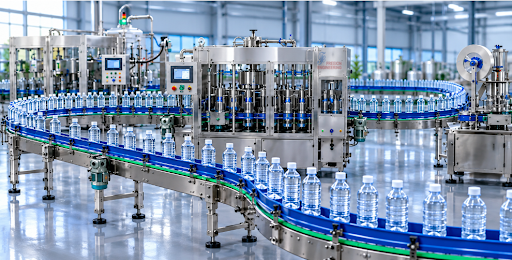
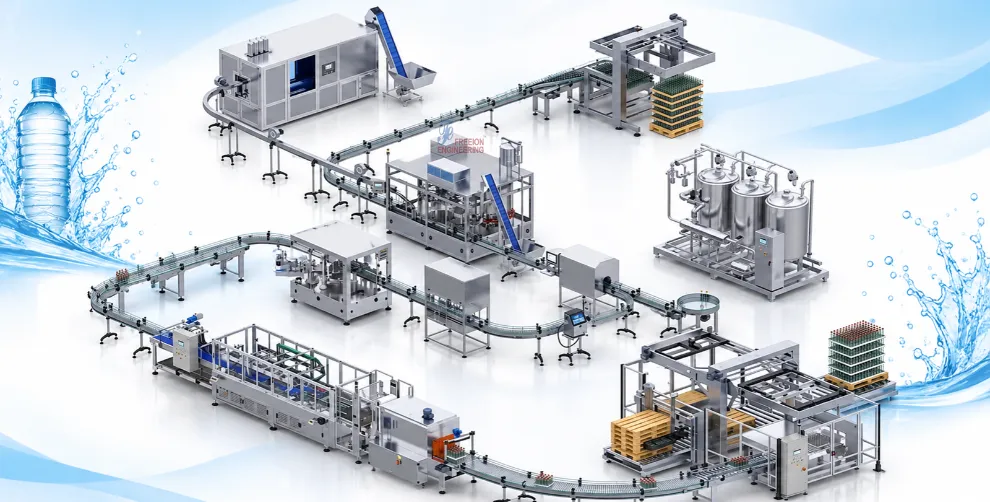
A Mineral Water Bottling Plant is a full factory setup. It cleans raw water. It makes plastic bottles. It fills them and packs them for sale. Smart buyers do not buy from five sellers. They pick one turnkey maker who builds and links the whole line.
A standard setup has four main stages:
- Raw Water Cleaning: Sand filters, carbon filters, Reverse Osmosis (RO), UV units and ozone units clean the water.
- Bottle Blowing: Blow molding machines heat small PET preforms. They shape them into 250 ml, 500 ml, or 1-litre bottles.
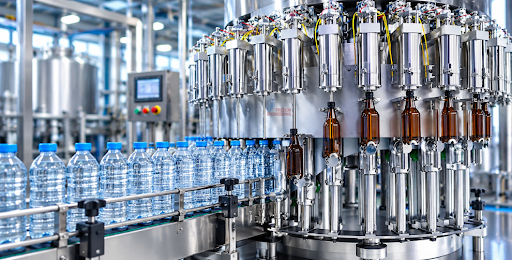
- Rinsing, Filling, and Capping: One monoblock washes each bottle inside. It fills the exact amount of water. It seals the cap tight.
- Labelling and Shrink Wrapping: Sleeve labellers, batch coders, and shrink tunnels get packs ready for trucks and shops.
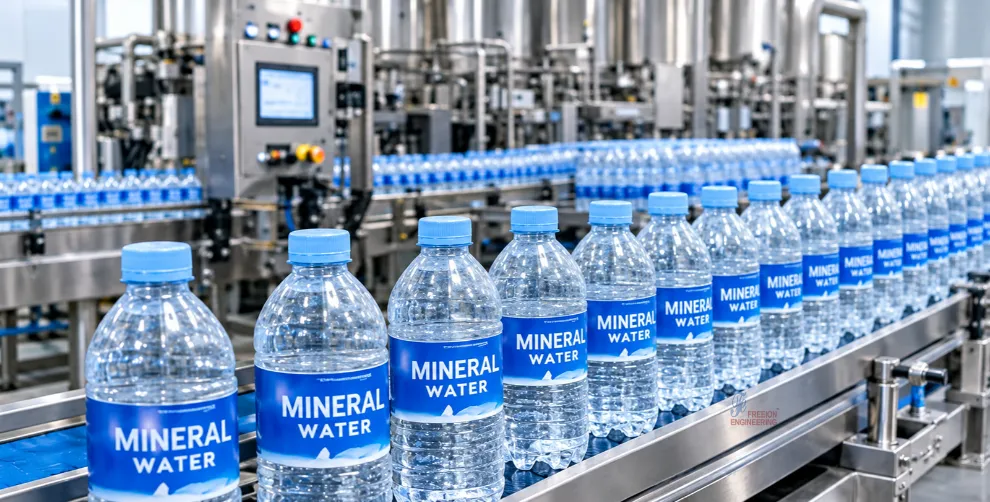
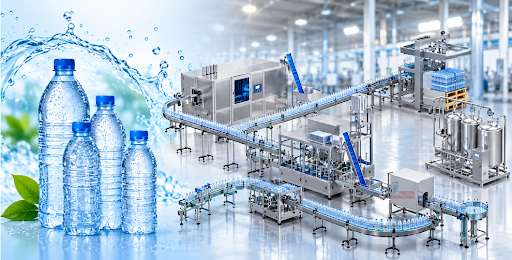
When selecting a reliable mineral water bottling plant manufacturer in India, consider FREEION Engineering’s Drinking Water Packaging Line, designed to streamline water filling, sealing, and packaging operations for efficient and hygienic production.
Each stage links to the next. If one stage is weak, the whole line slows down. So one maker for all stages means less risk. One team owns the result. You call one number when you need help.
Your local water may be hard. Hard water harms RO membranes. So add a Water softening plant before the RO unit. It removes extra calcium and magnesium. Your membranes last much longer.
Why Does Choosing the Right Mineral Water Bottling Plant Manufacturer Matter So Much?
An experienced Mineral Water Bottling Plant manufacturer controls your daily running costs. It also shapes your water recovery and license approval. In India, every packaged water brand must pass BIS (IS 14543) and FSSAI checks. You cannot sell one bottle before that.
A low-cost trader often uses thin steel. The pumps are cheap. The welding is poor. In six months, rust shows up inside the tanks. Filling valves start to drip. A real maker builds the Mineral Water Bottling Plant with SS 304 and SS 316 steel. These grades are food-safe. They also plan a layout that saves floor space. It cuts power bills. It passes audits on the first visit.
Ask how many plants they have built in your state. Ask how many still run today. Old clients are the best proof. A maker with many running plants has learned from many mistakes. You gain from that learning.
Want to see full turnkey machines? Check our product lineup. It is built for Indian water rules. It keeps hygiene high. It needs very little upkeep.
Which Factory Checks Should You Perform Before Selecting a Manufacturer?
Check the real factory, the client list, and the part quality before you pay any advance. Do not trust brochures or phone quotes alone.
Use this checklist to judge every Mineral Water Bottling Plant supplier:
- Visit the Workshop: Walk through the factory. Look at the CNC machines, the welding, and the stock.
- See Live Plants: Ask for two or three clients in your state. Watch their machines run in a live shift.
- Check Branded Parts: Look for trusted brands like Siemens, Schneider, Grundfos, or Festo.
- Verify BIS and FSSAI Support: Their engineers should give pipe diagrams, lab lists, and clean-room drawings.
- Check Filter Tech: For clear water, many plants pair RO with an Ultra Filtration System. It removes tiny solids. Your water looks crystal clear.
Take notes at each visit. Compare them side by side. The best maker will answer every question with ease.
How Do Different Mineral Water Bottling Plant Capacities Compare?
Match your machine speed to your local demand. This keeps your costs safe. It also leaves room to grow. The table shows common sizes in India:
| Plant Capacity | Bottles Per Hour (1 Liter) | Ideal Market | Floor Area | Power Load |
| 2,000 LPH (24-40 BPM) | 1,400 to 2,400 | Local towns, hotels, and startups | 2,500 to 3,500 sq. ft. | 25 to 35 kW |
| 4,000 LPH (60-90 BPM) | 3,600 to 5,400 | District retail and events | 4,500 to 6,000 sq. ft. | 45 to 60 kW |
| 6,000 LPH (120 BPM) | 7,200 | Regional brands in many cities | 7,000 to 9,000 sq. ft. | 75 to 95 kW |
| 10,000+ LPH (200+ BPM) | 12,000+ | Large commercial supply | 12,000+ sq. ft. | 120+ kW |
Pick a Mineral Water Bottling Plant size that suits your market today. Leave space for a bigger line later. Always ask if the speed is for 200 ml cups or full 1-litre bottles. An honest seller shares a speed chart for each bottle size.
Power load matters too. A big plant needs a strong power line. Check your local supply before you order. A wrong load causes trips and delays.
How Does a Good Manufacturer Support Your Compliance and Wastewater Setup?
A top Mineral Water Bottling Plant manufacturer guides you on pollution board rules and lab rules from day one. The board checks the reject water from RO systems. Missing papers can delay your launch by months.
Check that your supplier helps with these areas:
- Wastewater Reuse: An Effluent treatment plant treats reject water. You can reuse it for gardens, cooling, or floor wash.
- In-House Lab Help: BIS rules need an on-site lab. It runs daily chemical and germ tests.
- Clean-Room Design: Air curtains, UV chambers and steel pipes keep germs at zero during filling.
Keep all papers ready early. File them in time. A good maker gives you a clear list of papers. That saves weeks.
What Should You Ask About After-Sales Support and Spare Parts?
Fast spares and strong tech help keep your plant earning long after day one. Even the best Mineral Water Bottling Plant needs care. You must change rubber seals. You must clean membranes. You must tune sensors.
Ask these questions before you sign:
- Ready Spares: Do they keep capping heads, O-rings and heating parts in stock for same-day dispatch?
- On-Site Training: Will their team stay until trial runs go well and your staff is trained?
- Breakdown Help: How fast can an engineer help by video call or site visit in peak summer?
Need help with setup or repairs? Our service team is ready. We help with installation. We do regular checks. We fix faults fast. We work with plant owners across India and abroad.
Conclusion
Choosing the right Mineral Water Bottling Plant manufacturer is simple when you know what to check. Verify the real factory. Ask for food-grade steel. Check BIS layout skills. Test the after-sales support. A trusted partner saves you from costly breakdowns. You pass audits with ease. And you build a water brand that lasts for decades.
Freeion Engineering builds complete, energy-saving turnkey water bottling and treatment plants. We fit each plant to your capacity and budget. Our engineers guide you from layout design to setup and lifelong spares. If you have any queries, contact us on WhatsApp today to talk with our team and get a custom project plan.
Follow Instagram and Facebook for updates on advanced beverage packaging machinery, liquid filling solutions, and industrial automation.
Frequently Asked Questions (FAQs)
1. What is the average cost to set up a mineral water plant?
Setting up a Mineral Water Bottling Plant in India costs ₹35 lakh to ₹1.5 crore. A small 2,000 LPH semi-automatic unit costs about ₹35-50 lakh. That price covers the lab and licenses. A fully automatic 60 to 120 BPM turnkey line with a blow molding unit costs ₹65 lakh to ₹1.5 crore.
2. Which licenses are needed to start a Mineral Water Bottling Plant in India?
You need BIS certification (IS 14543). You need an FSSAI central license. You need State Pollution Control Board (PCB) consent. You also need a groundwater NOC and GST registration.
3. How much land and water are needed for a bottling unit?
A medium plant needs about 4,000 to 6,000 sq. ft. of covered shed. Keep separate zones for raw water, filling, lab, and storage. You also need a steady borewell or city water source. It should give at least double your hourly output.
4. How much profit can you earn from a Mineral Water Bottling Plant?
Well-run plants earn a net margin of 18% to 30%. It depends on transport distance, preform weight, and brand. Selling directly to local dealers, railways, and offices lifts margins further.
5. How long does it take to install and start a new bottling plant?
Making the machines takes 30 to 45 days. Site setup, piping, and trial runs take 15 to 20 more days. Add time for BIS lab tests and license checks. Most owners start sales in 4 to 6 months.